

Diesel and petrol come from the same barrel. In the UK they carry the same fuel duty. Yet in mid-September 2026 a litre of diesel sat near 193p and a litre of petrol near 171p.
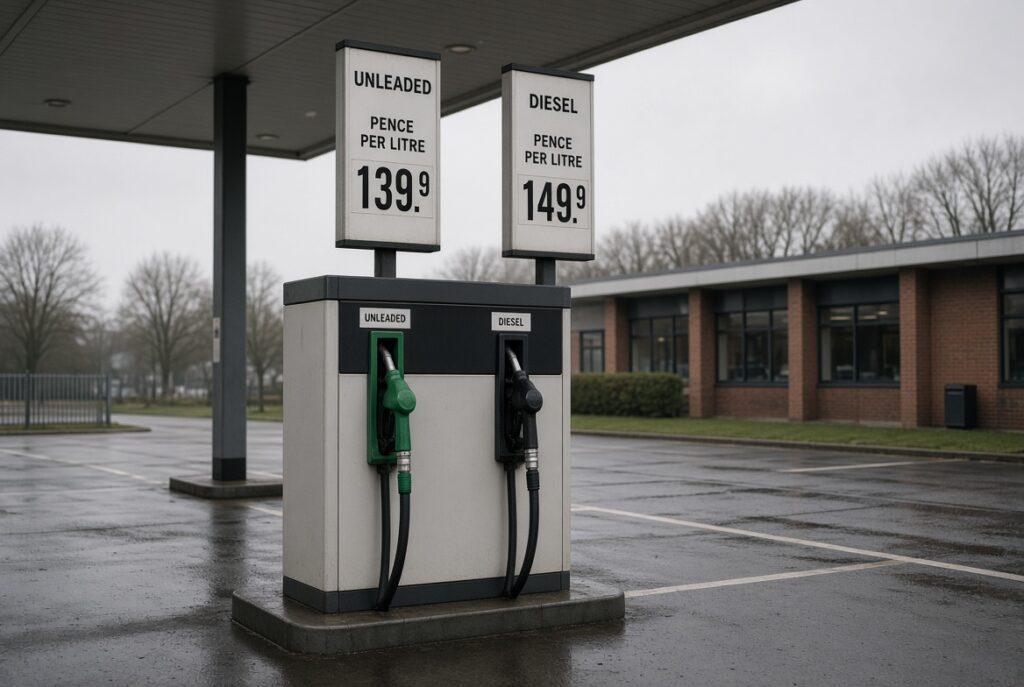
The gap is not a tax trick. It is a supply-chain fact: Britain makes enough petrol. It does not make enough diesel.
| Same tax Duty 52.95p on both. VAT 20% on both. |
Different product Diesel wholesale is the expensive bit. |
Different door Petrol is refined at home. Diesel is imported. |
Why is diesel dearer than petrol if the tax is the same?
Open a litre of each on a till receipt and the tax line looks almost identical. Fuel duty is 52.95p on both. VAT is 20% on the whole pump price, so the dearer litre pays a few extra pence of VAT. That is not what built a 20p-plus gap.
The gap is the product — the wholesale diesel that arrives before duty is added. On 14 September 2026 a typical split looked like this.
| What is in a litre | Petrol | Diesel |
|---|---|---|
| Wholesale product | ~87p | ~106p |
| Fuel duty | 52.95p | 52.95p |
| VAT (20%) | ~28p | ~32p |
| Pump (mid-Sept 2026) | ~171p | ~193p |
Sources: DESNZ / CMA Fuel Finder week of 14–15 September 2026; UKOilWatch product-cost split. Averages move daily. The lesson does not: duty is matched, the barrel is not.
Think of crude as flour. Petrol and diesel are two different loaves from the same sack. UK mills still bake enough of the petrol loaf. After Grangemouth and Lindsey closed in 2025, they do not bake enough of the diesel loaf. So diesel has to travel. Travel has a price. That price is what you see in the orange bar.
Where does UK diesel actually come from?
Most of what Britain burns as road diesel and farm diesel is not pumped from a British well and refined in a British still. In 2025 about two-fifths of UK petroleum-product imports were diesel. The United States sent about a third of that imported diesel. The Amsterdam–Rotterdam–Antwerp pool — the Netherlands and Belgium — sent most of the rest. That pool is the cash-and-carry counter of north-west Europe. When Gulf crude or Russian distillate tightens, ARA prices first. UK wholesale follows in days.
| US 31% | NL 26% | BE 11% | Other 32% |
Imported UK diesel origins, 2025. Source: DUKES 2026. Netherlands and Belgium sit inside the ARA hub that sets the UK rack.
Petrol is a home product with a spare. Diesel is a traded product with a short. That is why a war in the Gulf, a hit on a Saudi pipeline, or a Russian export pause shows up on a UK diesel pump before it shows up on a petrol pump.
Does a closed Hormuz mean empty UK pumps?
Almost never. Price is how the system rations. Forecourts raise the label so tanks last. That looks cruel on a Monday morning. It is also why a typical British station still has diesel when the headline says “Hormuz closed.”
| What people fear | What usually happens |
|---|---|
| Pumps run dry nationwide | Rare. Price rises. Lorries still roll. Queues are local and short-lived. |
| Diesel hits a four-year high | This is the live pattern in September 2026. RAC put diesel near 192p on 14 September. |
| A 55-litre family tank costs over £105 | True at those pump averages. The bill moved. The nozzle still works. |
The UK does not take most of its crude straight through Hormuz. It takes the price of diesel that the rest of Europe must buy when that gate is thin. Less than one per cent of UK crude may be labelled “Persian Gulf.” The diesel cargo that fills Immingham and the ARA tanks is still priced off a world that cannot easily replace Gulf barrels and Russian distillate at the same time.
Why is red diesel up when duty was cut?
Red diesel is the farm and construction clock. It is the same molecule as white diesel with dye and a lower duty stamp. On 15 June 2026 the Treasury cut that stamp from 10.18p to 6.48p a litre. The farm price still climbed.
| 2026 | Red diesel | White diesel | What moved |
|---|---|---|---|
| Jan–Feb | ~72–78p | ~145–150p | Baseline before the Iran war |
| March–April peak | ~110–124p | ~180–192p | Hormuz hits energy first |
| June (duty cut) | ~96p | 176.6p | Tax down; crude still high |
| August | 108.5p | 181.5p | Second leg higher |
| Early–mid September | ~107p+ | ~191–193p | Saudi pipeline hit; Brent ~$108 |
Sources: AHDB; Farmers Weekly; DESNZ; RAC / Fuel Finder. Rounded. Red diesel is ex-VAT to the farm; white diesel is the pump including VAT.
Duty is a small slice of red diesel. Wholesale is the large slice. Cut 3.7p of tax and a 30p wholesale jump still leaves the tractor dearer. That is why a farmer can thank the Treasury and still face a three-figure litre.
Why do lorries and farms feel it before the loaf?
Diesel is the fast clock. Food is the slow clock. Crude can reprice in a session. UK wholesale diesel follows in days. The loaf waits on mill contracts, feed tickets and supermarket deals. That lag is the subject of why UK food prices rise while shelves stay full. The fuel desk’s job is the first two weeks.
| Clock | What moves | When you notice |
|---|---|---|
| Same day | Brent and the diesel crack | News, not the pump |
| 1–7 days | UK wholesale rack, red diesel quotes | Farm tank, haulier surcharge |
| 1–14 days | White diesel at the pump | The £105 fill |
| 2–8 weeks | Fertiliser and cooking oil | The bottle, not the bay |
| 1–6 months | Loaf and meat counter | Label up, shelf still full |
Two extra doors sit behind diesel in 2026. Hormuz is the energy gate. Russian refining and Black Sea loadings are the distillate gate. Ukrainian strikes on Russian refineries cut the diesel Europe used to buy from the east. When both doors pinch at once, the diesel crack — the extra money a refinery earns for turning crude into diesel rather than petrol — stays wide. That is why diesel can set four-year highs while petrol is still short of its 2022 record.
What should I actually watch this week?
Do not watch every war map. Watch four numbers. They tell you whether next month’s food bill is being written now.
| Watch | Why it matters | Where |
|---|---|---|
| Brent | Sets the floor under every litre | Any market page |
| UK diesel vs petrol gap | A wide gap means a distillate squeeze, not just crude | Fuel Finder / RAC |
| Red diesel quotes | The farm clock; next season’s field cost | AHDB / Farmers Weekly |
| ARA gasoil | The European counter that prices UK imports | Wholesale screens |
If you need a cheaper fill this week, supermarket sites usually sit a few pence under the oil-company average. The national spread on 15 September was tens of pence from cheapest to dearest. That is a shopping fact, not a supply fact. A cheap pump does not mean the country has spare diesel. It means one retailer bought earlier, or prices slower.
If a bay on the food aisle looks thin, that is a different question. Most empty bays are a local lorry, not a national tank. Read why UK supermarket shelves are empty before treating a photo as a shortage.
The short answer
UK diesel is dearer than petrol because the wholesale molecule is scarce here and plentiful-enough petrol is not. Tax is the same. The import ticket is not. Hormuz, a Saudi pipeline and damaged Russian stills all land on that ticket first. The pump rarely runs dry. The label moves. Two weeks later the farm and the lorry have already paid. Months later the loaf follows.
Sources: DESNZ weekly road fuel prices; CMA Fuel Finder; RAC; DUKES 2026; AHDB fuel tracker; Farmers Weekly; Quarterly Energy Prices June 2026. Figures rounded to the week of 14–15 September 2026 and will move.